How to Engage Children in Learning: Strategies That Spark Curiosity and Growth

Introduction: Shiksha, Parivar, and the Heart of Learning
In every Nepali household, the value of shiksha (education) is deeply woven into the fabric of daily life. From the stories told by grandparents to the blessings received before exams, learning is seen not just as a path to personal success but as a contribution to the parivar (family) and the nation. Yet, in today’s fast-changing world, many parents wonder: how can we make learning more engaging, joyful, and meaningful for our children?
We understand the challenges—limited time, resources, and the pressure to perform academically. But what if learning could be sparked by curiosity, nurtured by culture, and supported by everyday family life?
This blog offers practical, research-backed strategies to help Nepali parents foster curiosity and growth in their children’s learning—rooted in our sanskriti (culture) and adapted to modern needs.
Understanding Curiosity in the Nepali Context
Curiosity is the fuel of lifelong learning. In Nepal, we’ve long nurtured it through katha (oral storytelling), traditional games, and community rituals. Whether it’s a child asking why the moon follows them during a walk home from school or wondering how sel roti puffs up in hot oil—these moments are golden opportunities to spark learning.
According to Ryan & Deci’s Self-Determination Theory, intrinsic motivation—driven by curiosity—leads to deeper engagement and better learning outcomes. Children learn best when they feel autonomy, competence, and connection.
Historically, Nepal’s gurukul system encouraged exploration through discussion, observation, and practice. Reviving this spirit doesn’t require ancient ashrams—it starts at home, with parents encouraging questions, storytelling, and hands-on experiences.
Example: During Dashain, when families gather to prepare tika and jamara, parents can explain the symbolism, the biology of plant growth, and the math behind budgeting for festival expenses. Learning becomes part of celebration.
Challenges Nepali Parents Face
Despite our rich cultural heritage, modern education in Nepal faces hurdles:
- Rote Learning Dominance: Many schools still emphasize memorization over understanding, limiting creativity and critical thinking.
- Resource Gaps: Rural families may lack access to digital tools or well-trained teachers, while urban parents juggle busy schedules.
- Cultural Tensions: Parents want their children to succeed globally but also preserve Nepali values like respect for elders and community harmony.
In both public and private schools, the pressure to perform in exams often overshadows the joy of learning. Yet, as Teach For Nepal’s fellows have shown, even in resource-limited classrooms, curiosity can be reignited through thoughtful engagement.
Research-Backed Strategies to Engage Children
Here are five practical strategies, supported by global and local research, tailored for Nepali families:
1. Storytelling and Cultural Connection
Use lok katha (folk tales) and festival stories to teach values, language, and critical thinking. Narrative-based learning improves comprehension and empathy.
- Example: Tell the story of Seto Machhindranath to explore water conservation and community rituals.
- Research: Narrative learning enhances memory and emotional engagement (Bruner, 1990).
2. Hands-On Learning with Local Materials
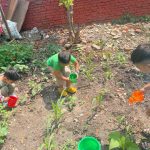
Encourage children to learn through doing—gardening, cooking, crafting.
- Example: Making rangoli teaches geometry and symmetry; weaving a dhaka topi introduces patterns and cultural identity.
- Research: Experiential learning boosts retention and problem-solving (Kolb, 1984).
3. Play-Based Learning with Traditional Games
Games like dandi biyo, bagh chal, or guchha develop strategic thinking and motor skills.
- Example: Use bagh chal to teach logic and planning.
- Research: Play enhances cognitive flexibility and social skills (Bodrova & Leong, 2007).
4. Parental Involvement and Co-Learning
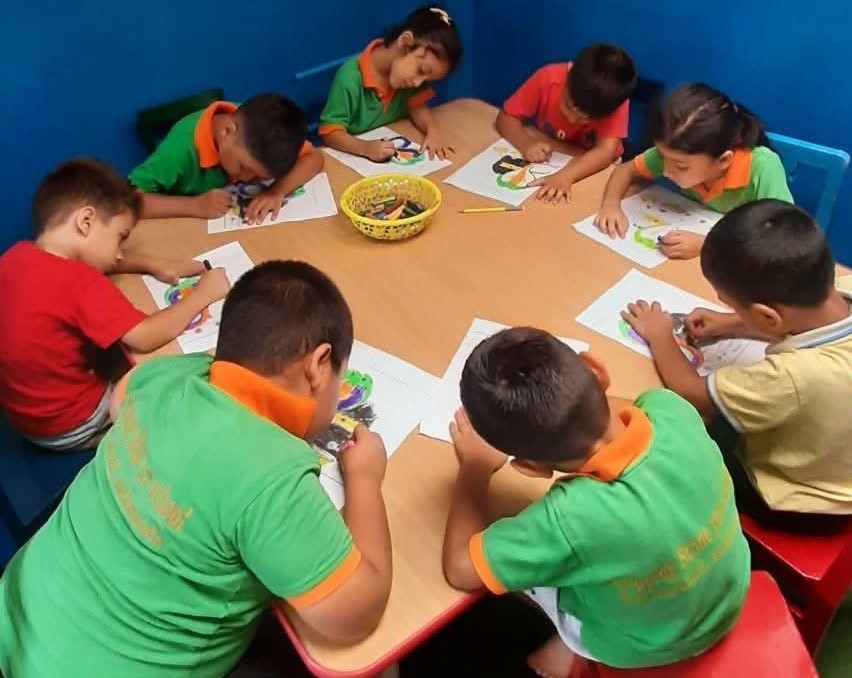
Daily conversations, shared reading, and collaborative activities strengthen learning bonds.
- Example: Discuss fractions while cooking sel roti, or explore science during a hike in the hills.
- Research: Epstein’s framework shows parental involvement improves academic success and motivation.
5. Technology Integration (Where Possible)
For families with access, use free Nepali-language apps or YouTube channels for interactive learning.
- Example: Watch animated Nepali stories or science experiments together.
- Research: Blended learning improves engagement and flexibility (Horn & Staker, 2014).
Practical Tips:
- Create a small learning corner at home with books, crafts, and recycled materials.
- Encourage children to ask “why” and “how” questions daily.
- Celebrate small learning milestones with praise or family rituals.
Balancing Tradition and Modernity
Nepali parents often walk a tightrope—preserving sanskriti while embracing modern education. The key is integration, not opposition.
- Use festivals like Tihar to teach math (budgeting), science (light and sound), and art (mandala design).
- Encourage respect for guru and elders while promoting inquiry and innovation.
- Model curiosity: learn something new with your child—be it a recipe, a song, or a science fact.
As Nepal modernizes, our cultural wisdom remains a powerful tool for shaping resilient, thoughtful learners.
Conclusion: A Journey Rooted in Parivar and Shiksha
Engaging children in learning isn’t about expensive tools or perfect schools—it’s about nurturing curiosity, celebrating culture, and walking alongside them in their journey.
As the Nepali proverb says, “Shiksha bina jeevan andhakar”—without education, life is darkness. But with curiosity, culture, and care, we can light the path for our children.